

Tiziana Life Sciences to Dose First Patient in Phase 2 Alzheimer’s Trial
- First Patient Expected to be Dosed Next Week with Intranasal Foralumab
- PET Scan Shows Presence of Untreated Neuroinflammation in Alzheimer’s Patient on Leqembi® (Lecanemab) Anti-Amyloid Therapy
The Phase 2 clinical trial will evaluate intranasal foralumab both as monotherapy and in combination with an FDA approved anti-amyloid therapy, lecanemab or donanemab, in patients with early Alzheimer’s disease (AD). Baseline clinical assessments, cognitive testing, TSPO-PET imaging, and fluid biomarkers have been completed in the first participants screened in the trial.
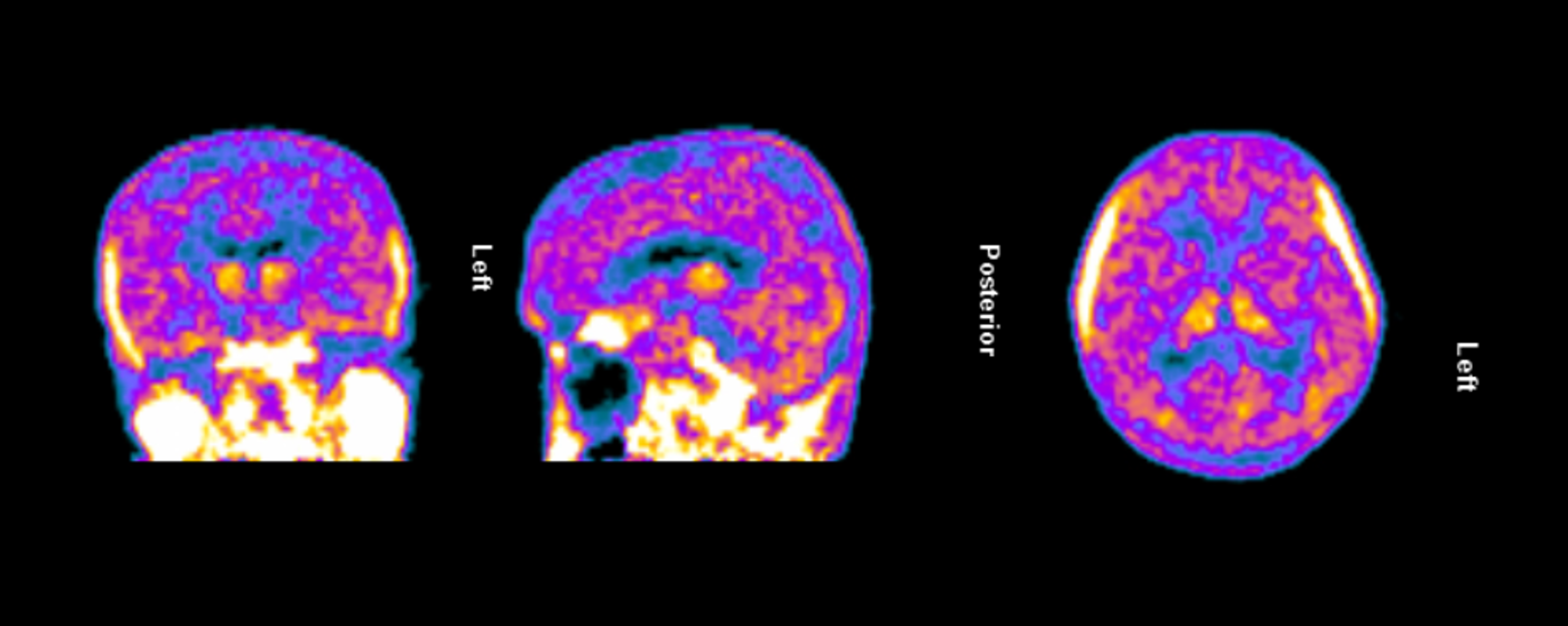
The clinical trial launch is supported by new TSPO-PET imaging evidence demonstrating persistent and widespread microglial activation in an Alzheimer’s patient despite treatment with lecanemab, confirming that neuroinflammation remains present even after amyloid plaque reduction. Lecanemab, marketed by Eisai and Biogen as Leqembi®, is one of the two FDA-approved anti-amyloid therapies for treating early Alzheimer’s and is proven to reduce beta-amyloid plaques.
Figure 1. TSPO-PET scan of an Alzheimer’s patient treated with lecanemab demonstrating persistent and widespread microglial activation throughout the brain.
Dr.
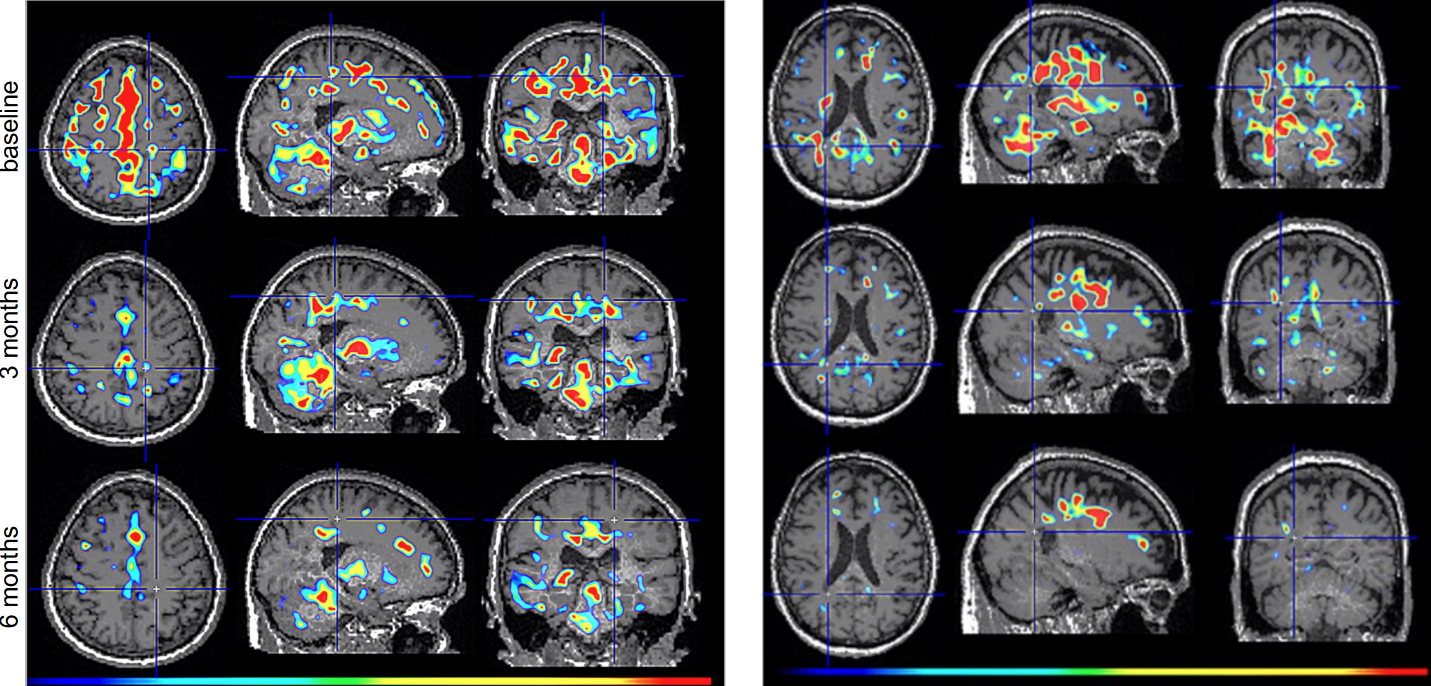
Figure 2. TSPO-PET scans from intranasal foralumab-treated MS patients showing marked reduction in microglial activation over a 6-month treatment period.
Phase 2 Trial Design and Rationale
The study will evaluate whether intranasal foralumab:
- As a monotherapy, reduces microglial activation and slows cognitive decline by suppressing neuroinflammation.
- In combination with lecanemab or donanemab will provide additive or synergistic benefit by simultaneously targeting amyloid pathology and persistent microglial inflammation.
“With enrolment now underway and baseline neuroimaging and biomarkers secured, we are on the verge of testing a fundamentally new approach to Alzheimer’s — one that treats the chronic brain inflammation that is associated with ongoing neurodegeneration. We expect the first patients to begin dosing within days,” said
Intranasal foralumab is a fully human anti-CD3 monoclonal antibody designed to induce Tregs and suppress pathological neuroinflammation, positioning it as a potential first-in-class therapy to address the inflammatory component of Alzheimer’s disease that remains active even after amyloid clearance.
About the Phase 2 Trial
The Phase 2 study is designed to evaluate the safety, tolerability, and efficacy of intranasal foralumab as both a monotherapy and in combination with lecanemab or donanemab in early/mild AD. Key endpoints will include measures of neuroinflammation (via TSPO-PET imaging), cognitive function, and biomarker changes related to amyloid and tau pathology. Results from this trial will inform future development and may establish a new paradigm for treating AD by targeting neuroinflammation alone or in combination with anti-amyloid therapy.
About Foralumab
Foralumab, a fully human anti-CD3 monoclonal antibody, is a biological drug candidate that has been shown to stimulate T regulatory cells when dosed intranasally. At present, 14 patients with Non-Active Secondary Progressive Multiple Sclerosis (na-SPMS) have been dosed in an open-label intermediate sized Expanded Access (EA) Program (NCT06802328) with either an improvement or stability of disease seen within 6 months in all patients. In addition, intranasal foralumab is currently being studied in a Phase 2a, randomized, double-blind, placebo-controlled, multicenter, dose-ranging trial in patients with non-active secondary progressive multiple sclerosis (NCT06292923).
Foralumab is the only fully human anti-CD3 monoclonal antibody (mAb) currently in clinical development. Immunomodulation by intranasal foralumab represents a novel avenue for the treatment of neuroinflammatory and neurodegenerative human diseases.[1],[2]
About
For more information about
Forward-Looking Statements
Certain statements made in this announcement are forward-looking statements. These forward-looking statements are not historical facts but rather are based on the Company's current expectations, estimates, and projections about its industry, its beliefs, and assumptions. Words such as 'anticipates,' 'expects,' 'intends,' 'plans,' 'believes,' 'seeks,' 'estimates,' and similar expressions are intended to identify forward-looking statements. These statements are not guarantees of future performance and are subject to known and unknown risks, uncertainties, and other factors, some of which are beyond the Company's control, are difficult to predict, and could cause actual results to differ materially from those expressed or forecasted in the forward-looking statements. The Company cautions security holders and prospective security holders not to place undue reliance on these forward-looking statements, which reflect the view of the Company only as of the date of this announcement. Actual results may differ materially from those indicated by such forward-looking statements as a result of various important factors, including: the uncertainties related to market conditions and other factors described more fully in the section entitled ‘Risk Factors’ in Tiziana’s Annual Report on Form 20-F for the year ended
For further inquiries:
+44 (0) 207 495 2379
email: info@tizianalifesciences.com
[1] https://www.pnas.org/doi/10.1073/pnas.2220272120
[2] https://www.pnas.org/doi/10.1073/pnas.2309221120
Photos accompanying this announcement are available at
https://www.globenewswire.com/NewsRoom/AttachmentNg/48f529f2-1fc4-4466-ae1d-84fa808979a8
https://www.globenewswire.com/NewsRoom/AttachmentNg/bc4d6ed6-2598-489a-859a-f4387ad81ba0


Figure 1
TSPO-PET scan of an Alzheimer’s patient treated with lecanemab demonstrating persistent and widespread microglial activation throughout the brain.
Figure 2
TSPO-PET scans from intranasal foralumab-treated MS patients showing marked reduction in microglial activation over a 6-month treatment period.
Source: Tiziana Life Sciences Ltd.